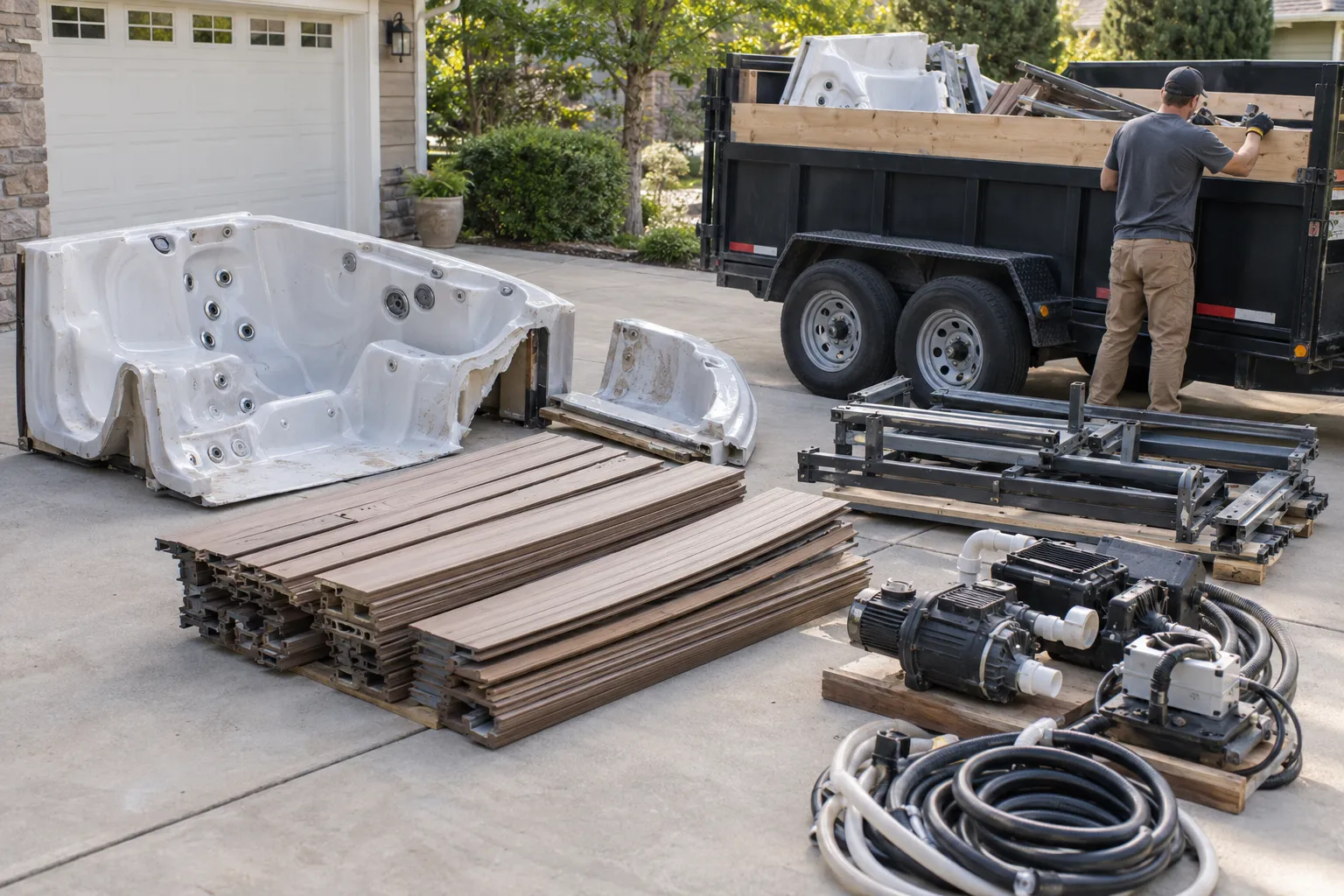
Start with a material inventory
A hot tub that looks like one bulky object is a stack of different materials. A portable unit may contain an acrylic or composite shell, foam, wood or composite skirting, a metal or wood frame, pumps, a heater, plumbing, wiring, and a vinyl cover. The useful question is not whether “the hot tub” can be recycled. It is which parts a receiving facility accepts, in what condition, and whether separation is required before arrival.
Keep chemicals out of the debris load
Remove spa chemicals, cleaners, and other labeled products before demolition. California’s Department of Toxic Substances Control says household hazardous waste should not go in the trash, down a drain, or be abandoned. Keep the products in their original containers when possible and check the local household hazardous-waste program for acceptance. A removal estimate should state whether chemical containers are excluded.
Ask where pumps and controls belong
Pumps, controls, lighting, and other electrical parts do not automatically qualify for curbside recycling. CalRecycle advises residents to use an appropriate e-waste or recycling directory for unwanted electronics. The exact destination depends on the component and the receiving program, so ask the hauler what will be separated and what the facility accepts.
Use this disposal checklist
Before booking, list the shell, cabinet, cover, steps, loose accessories, pump equipment, and any chemicals still on site. Ask whether the quote includes loading, transport, disposal fees, cleanup, and the destination for excluded items. Avoid a blanket recycling promise. A clear material plan is more useful than a percentage that cannot be verified.
Connect the checklist to the service
Use the checklist above, then review the scope and exclusions on the Hot Tub Disposal page.
Review Hot Tub Disposal