Condition comes before convenience
An intact move only makes sense when the shell and frame can tolerate handling. Rot, cracks, saturated insulation, loose equipment, or a weakened base can change the plan. A provider should inspect the unit rather than treating every square spa as the same object.
Route geometry decides the method
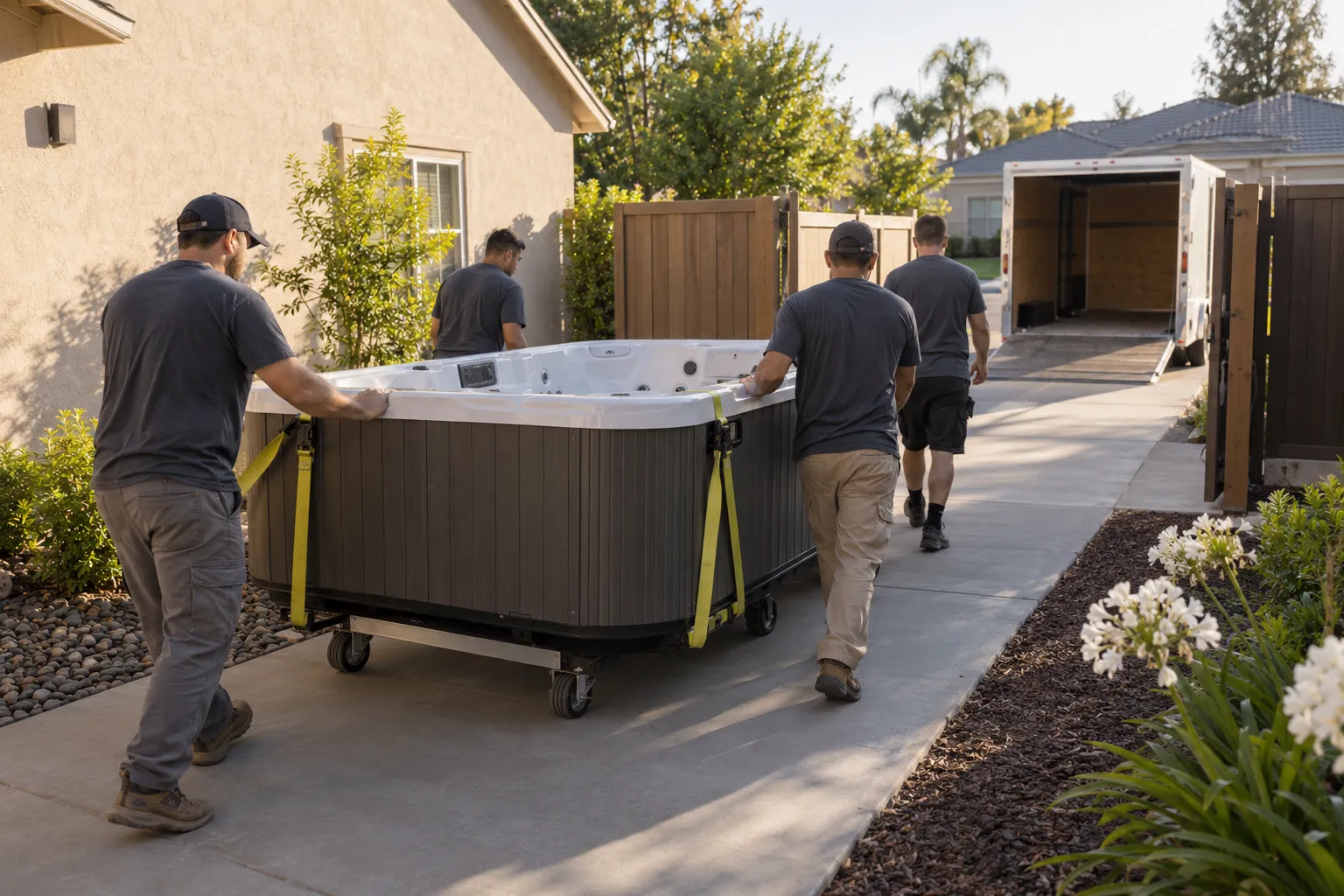
Measure the tub and the narrowest route point, but also account for corners. A unit can fit through a gate on paper and still fail to rotate between a wall and fence. Steps, slopes, gravel, wet turf, and low branches also affect whether a dolly or other equipment can travel safely.
Whole-unit hauling is not relocation
Removal hauling is usually a one-way trip to a receiving facility. Relocating a working spa requires protecting the shell, plumbing, cabinet, and equipment for transport, then preparing the destination foundation and utilities. If you want the unit reused, say so before the estimate; the handling plan is different.
Questions to ask before pickup
Ask whether the estimate assumes whole-unit movement or dismantling, who disconnects utilities, what route protection is included, and what happens if hidden damage appears. Confirm whether the cover, steps, accessories, and pump equipment are part of the load. A precise scope prevents the word “haul” from hiding several different jobs.
Connect the checklist to the service
Use the checklist above, then review the scope and exclusions on the Hot Tub Hauling page.
Review Hot Tub Hauling